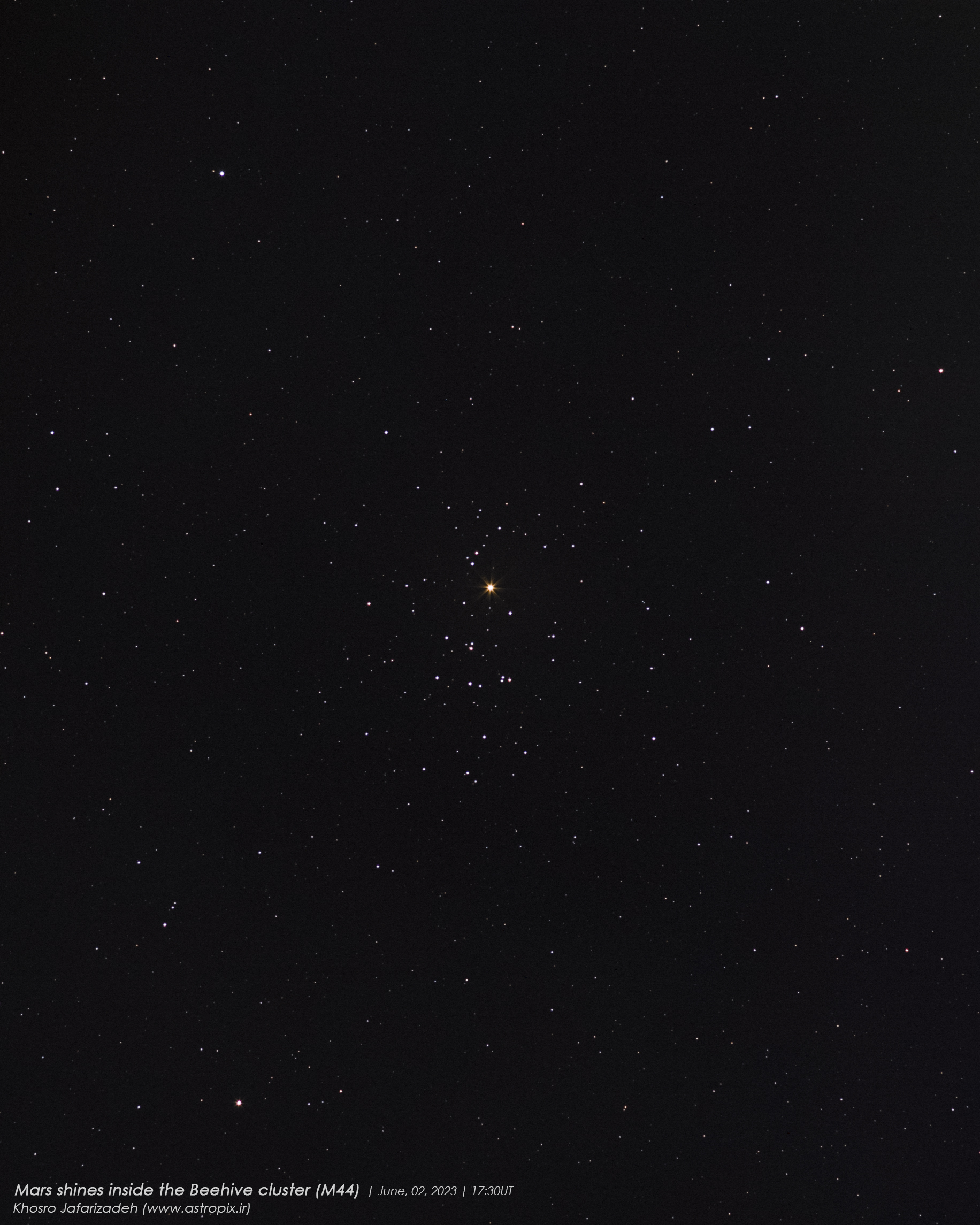
The glow of the planet Mars in the beehive star cluster.. Friday evening, June 12, 2023, was the best opportunity to see the planet Mars among the stars of the beautiful beehive star cluster . Prepared to photograph this fascinating phenomenon and the sky became cloudy as usual. But I didn’t stop trying and I got this image with proper photography and processing.
Equipment : Camera : Canon6D Optic : Canon 200mmII Mount : Sky-Watcher HEQ5Pro
Data : RGB : 25x5s Dark : -15 Flat : -60 Software : PixInsight, Photoshop
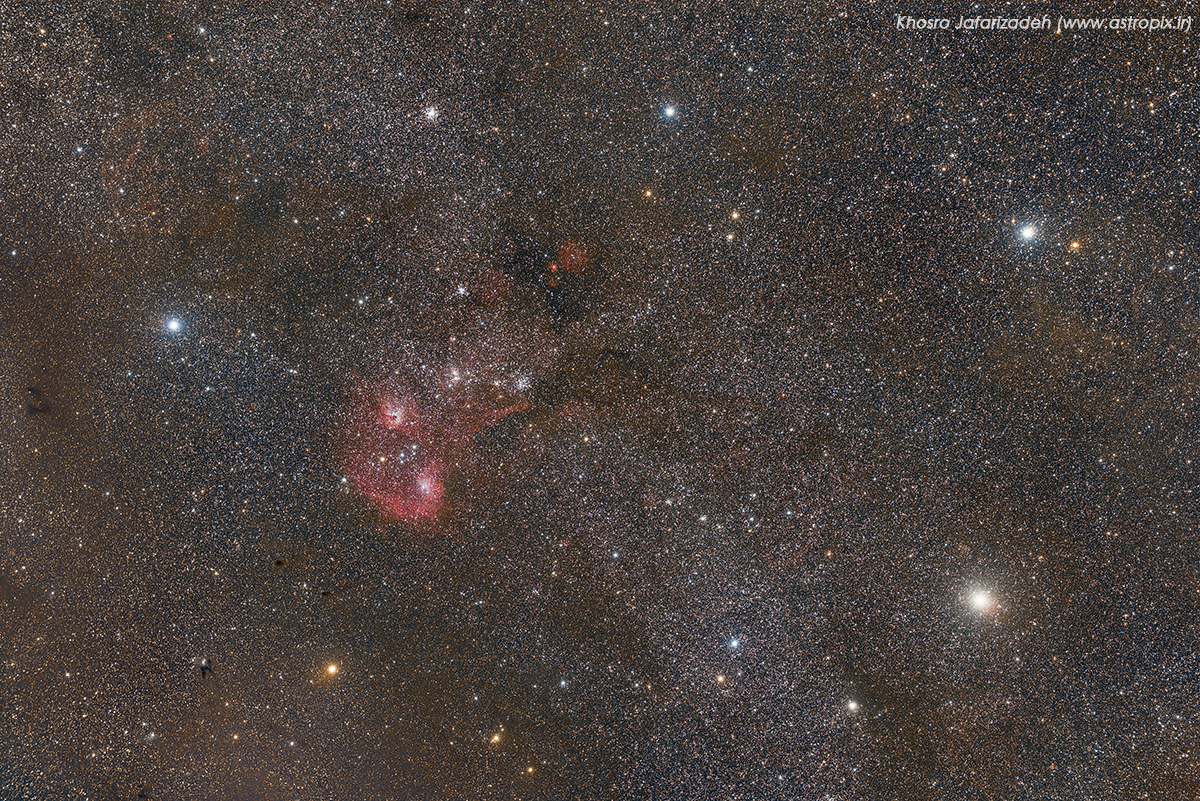
One of my favorite constellations is Auriga. This constellation is full of dark nebulae, open and closed star clusters, molecular clouds and interstellar dust. This January, I had the opportunity to photograph this beautiful constellation with the Sigma 85 Art lens in the unique and dark sky of the Iranian desert. This image is the result of 144 photos with exposure of 2 minutes for each photo, which is a total of 4.8 hours of photography of this area of the sky. When I look more closely at the Flamingo Nebula and the dark clouds near the red giant star, Theta Auriga, I scream with excitement.
Equipment information: Camera : Canon6D Modified Lens : 85 Art Sigma Tracker : Sky-Watcher Adventurer ProPack
Data Information: Date : Jan, 25, 2023 Location : Mesr desert – Iran RGB : 144x120s Dark : 22x120s Flat : -60 Bias : -200 Software : PixInsight, Photoshop
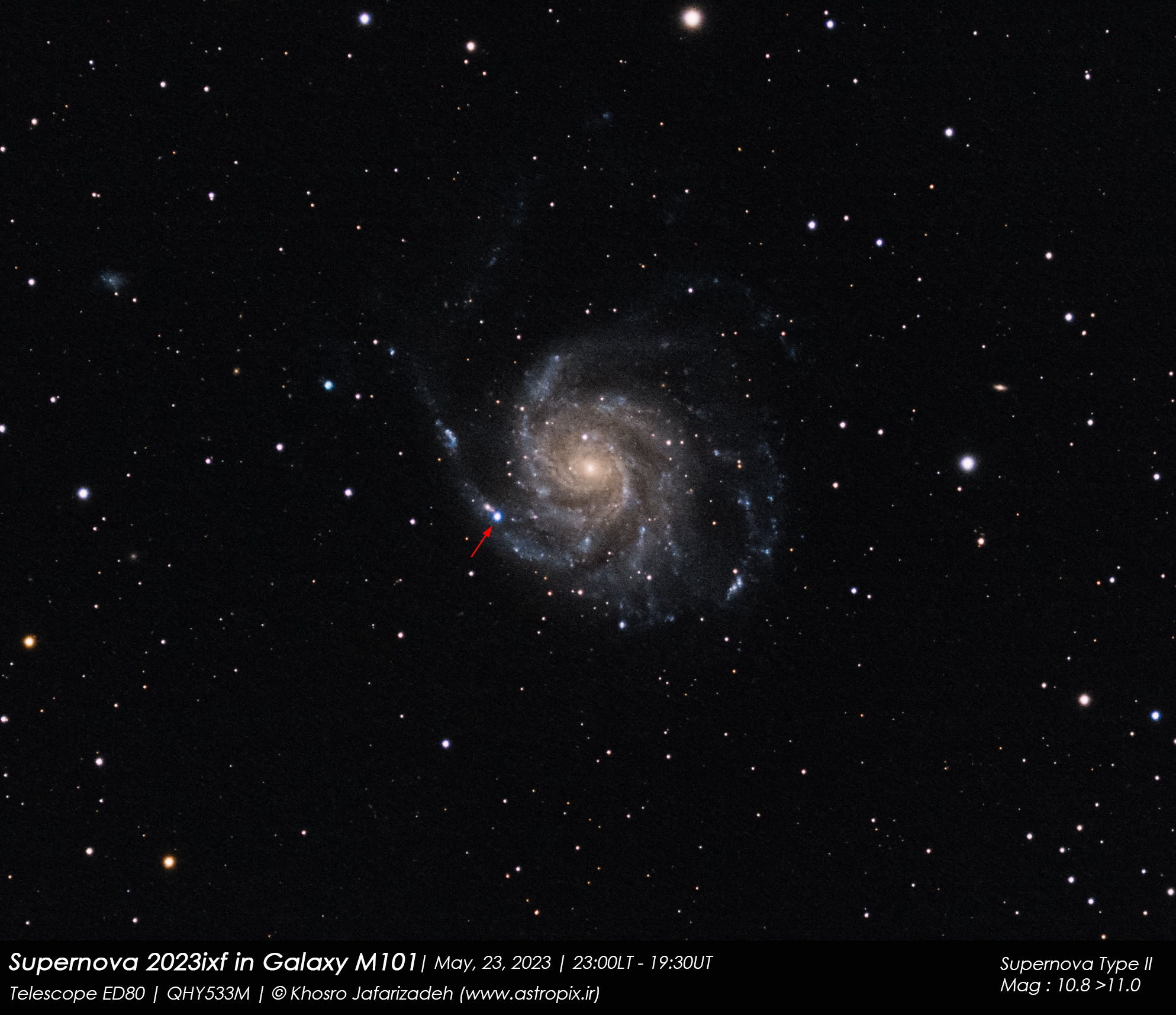
I traveled to the central desert of Iran to photograph the supernova. The whole sky of Iran was clouded. But I was able to photograph it on May, 23, 2023. I estimate the magnitude of the supernova to be 10.8! Telescope : ED80 Mount :HEQ5Pro Camera : QHY533M (LRGB) DATA L: 12x120s R, G, B : 20x120s
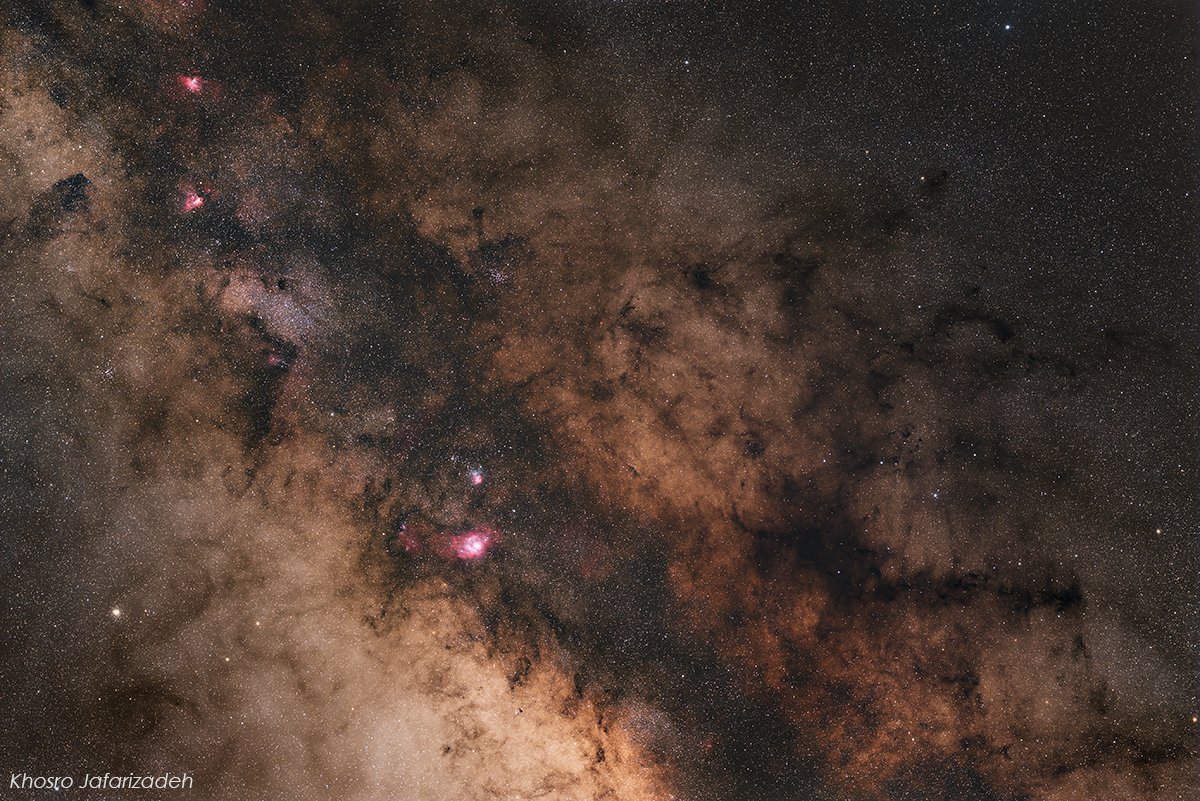
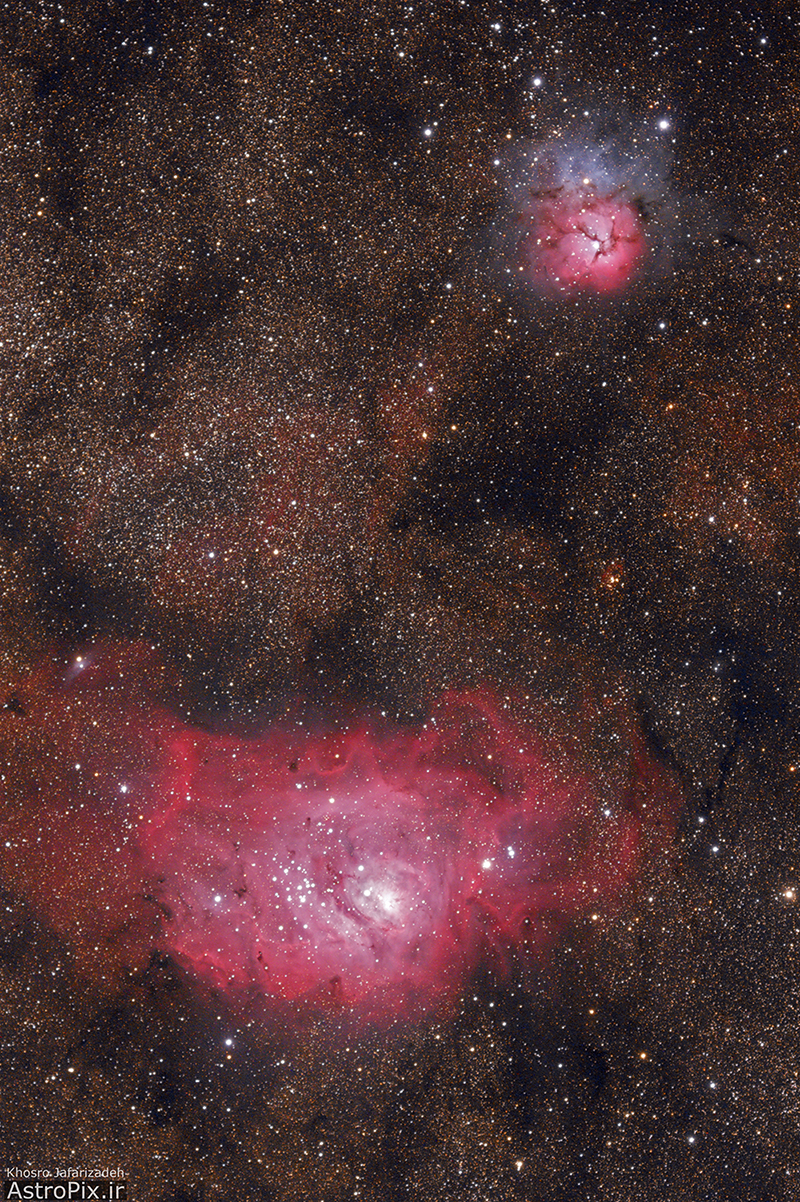
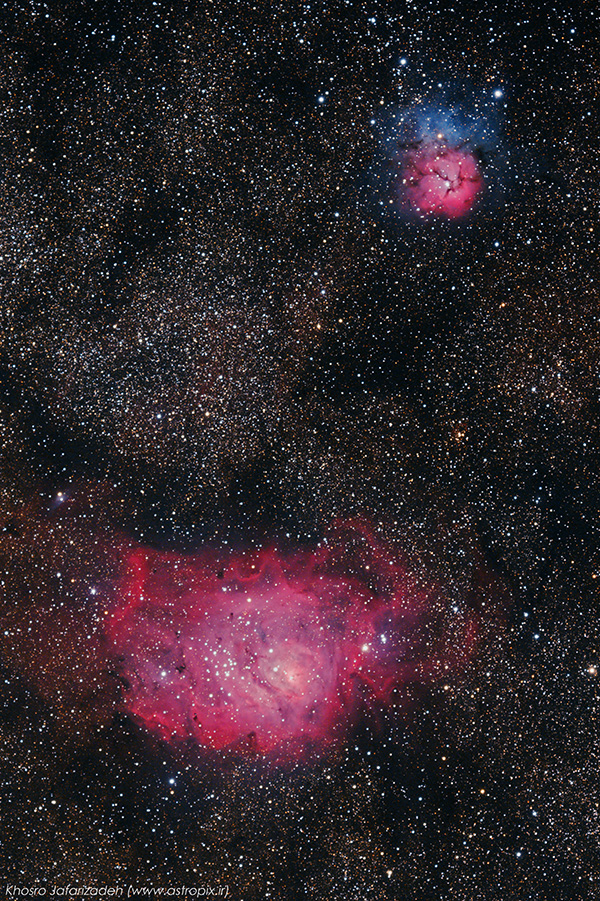
The Lagoon and Trifid nebulae are two very famous nebulae in Sagittarius, and both nebulae can be glimpsed with the naked eye (from a dark site), and they are easy to see with binoculars. This picture shows these two nebulae against the background of the dense star fields of the Sagittarius Arm of the Galaxy. The Lagoon nebula (M8) is the larger (and brighter) nebula to the south of the smaller Trifid nebula (M20). Wiki
پردازش جدید سحابی مرداب و سه تکه
این دو سحابی زیبا در محدوده نزدیک به مرکز کهکشان راه شیری و صورت فلکی قوس هستند. سحابی مرداب یا M8 یک ابر میانستارهای غولآساست که در صورت فلکی کمان قرار دارد. این ابر به عنوان سحابی گسیلشی و از مناطق اچ ۲ دستهبندی شده است. سحابی سه تکه، این سحابی در واقع یک منطقۀ تشکیل ستاره در صفحه کهکشان ما است که سه نوع سحابی ستاره ای مختلف را نشان می دهد: سحابی نشری قرمز که با اتم های هیدروژن احاطه شده، سحابی انعکاسی آبی که توسط نور ستاره انعکاس دهندۀ گرد و غبار تولید شده، و سحابی تاریک که در آن ابرهای گرد و غباری متراکم به شکل شبح ظاهر می شوند. اما منطقۀ نشری قرمز رنگ با خطوط گرد و غبار تیره به چند بخش تقسیم شده و نام معروف «سه تکه» از آن گرفته شده است.
Equipment Telescope : Sky-Watcher ED80Pro Camera : Canon 550D Modified Mount : HEQ5Pro
Data Information : RGB : 28x180s = 1.4H Flat + Dark + Bias + Dark Flat